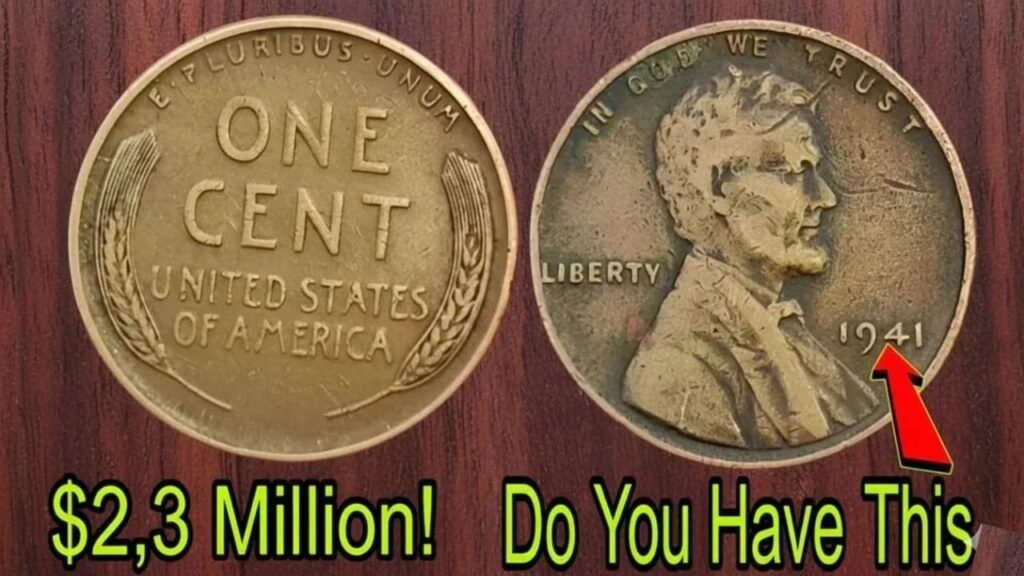
Rare Lincoln Wheat Penny Worth : You probably don’t think twice about pennies. They’re the coins people leave in those “take a penny, leave a penny” trays at gas stations. But here’s the crazy part – some old Lincoln Wheat Pennies have sold for nearly $600,000. Yes, one single penny. These coins were made between 1909 and 1958, and if you know what to look for, you might be sitting on a fortune without even realizing it. The best part? Learning to spot them takes about ten minutes.
Why These Old Coins Are Actually History in Your Hands
Think about this for a second – a coin from 1909 was around when your great-grandparents were kids. It survived World War I, the Great Depression, and World War II. The Lincoln Wheat Penny was special because it was the first US coin to feature a real person (Abraham Lincoln) instead of a pretend figure. The wheat stalks on the back represented America’s farming power. When the design changed in 1959, people suddenly wanted the old ones. Now collectors go crazy for them. Finding one is like discovering a tiny piece of American history that someone forgot about.
The Five Coins That Could Change Your Life
Not every wheat penny is valuable. Most are worth maybe a few bucks. But some are the rock stars of the coin world. The year, the tiny mint mark letter, and any mistakes during manufacturing make all the difference. Here are the ones you absolutely need to memorize:
| Coin Type | What Makes It Rare | What It’s Worth | Why Collectors Want It |
|---|---|---|---|
| 1909-S VDB | Made in San Francisco with artist’s initials on back | $600 – $3,500+ | First year ever made. The initials caused arguments and got removed fast |
| 1914-D | Made in Denver with very few produced | $200 – $15,000+ | Super hard to find in decent condition |
| 1922 No D | Missing “D” mark but actually made in Denver | $500 – $35,000+ | A dirty die filled in the mint mark by accident – famous error |
| 1931-S | Made in San Francisco during the Depression | $70 – $1,800+ | Nobody had money back then, so hardly any were made |
| 1943 Bronze | Looks copper but was made in 1943 | $100,000 – $250,000+ | This was a major mess-up – they were supposed to be silver that year |
| 1955 Double Die | Date and letters look blurry and doubled | $1,500 – $15,000+ | You can spot this mistake with just your eyes – super famous error |
What Makes One Penny Worth $5 and Another Worth $500,000?
Here’s the simple breakdown of why prices are so different. First up is rarity – how many were made that year? Low numbers mean harder to find. Next is condition – is your penny shiny like it just came from the factory, or is it scratched and dull? Shiny ones bring way more money. Last is errors – did the mint mess up during production? Coins with double images, wrong dates, or wrong metal types are like finding a misprinted video game – collectors lose their minds. When a coin has all three of these things happening at once, that’s when you see those huge price tags.
How to Become a Coin Detective Today
You don’t need special training to start looking for valuable pennies. You just need to know what to look for and where. Grab a magnifying glass and start checking every old coin you can find. Here are the tricks that actual collectors use:
- Get a magnifying glass with at least 10x power – you need to see tiny details
- Never ever clean a coin – cleaning scratches the surface and destroys the value completely
- Check every handful of change you get from stores
- Ask grandparents and older relatives if they have old jars of coins sitting around
- Look at the bottom back of the coin under “ONE CENT” for tiny D or S marks
- Handle coins by the edges only – finger oils damage the surface over time
- Buy a simple “Red Book” guide to US coins – it’s like a price bible for collectors
Frequently Asked Questions (FAQ)
Q: I found a wheat penny in my grandma’s drawer. Where do I check if it’s rare?
A: Flip it over to the back side. Look at the bottom area under the words “ONE CENT.” You might see a tiny “D” (that’s Denver), an “S” (San Francisco), or nothing at all (Philadelphia). Then match the date with our list above. That’s step one.
Q: What if I think I found something valuable? How do I sell it?
A: Don’t rush or get too excited yet. Take it to a local coin shop first and show a couple different dealers. Ask what they think. If they all say it’s special, you can pay to have it professionally graded by PCGS or NGC. That’s like getting a report card that proves it’s real and tells buyers the condition.
Q: What does “Mint State” actually mean in simple words?
A: It’s just a fancy term meaning your coin looks exactly like it did the day it was made. Nobody ever spent it at stores, so it never got worn down. It still has its original shiny glow and no scratches from being in pockets or cash registers.
Q: Is “Double Die” the same as two coins stuck together?
A: Nope, totally different things. Double die means the printing messed up on one coin so the letters and numbers look doubled, like a ghost image. Two coins stuck together is called a “double strike” and that’s a separate error. The 1955 penny is the most famous double die example.

Q: Why are some old pennies silver-colored and some are brown?
A: Great question! During World War II, the US needed copper for making bullets and electrical wires. So in 1943, they made pennies from steel and coated them with zinc, which makes them look silver. The super rare ones are the copper 1943 pennies that got made by accident when someone messed up at the factory.
Q: Is coin collecting expensive to start?
A: Not at all! You can literally start today for free by checking your pocket change. You can also buy bundles of wheat pennies online for like ten bucks. It’s basically a treasure hunt that teaches you history along the way. Plus you never know when you might find that $500,000 coin hiding in plain sight.