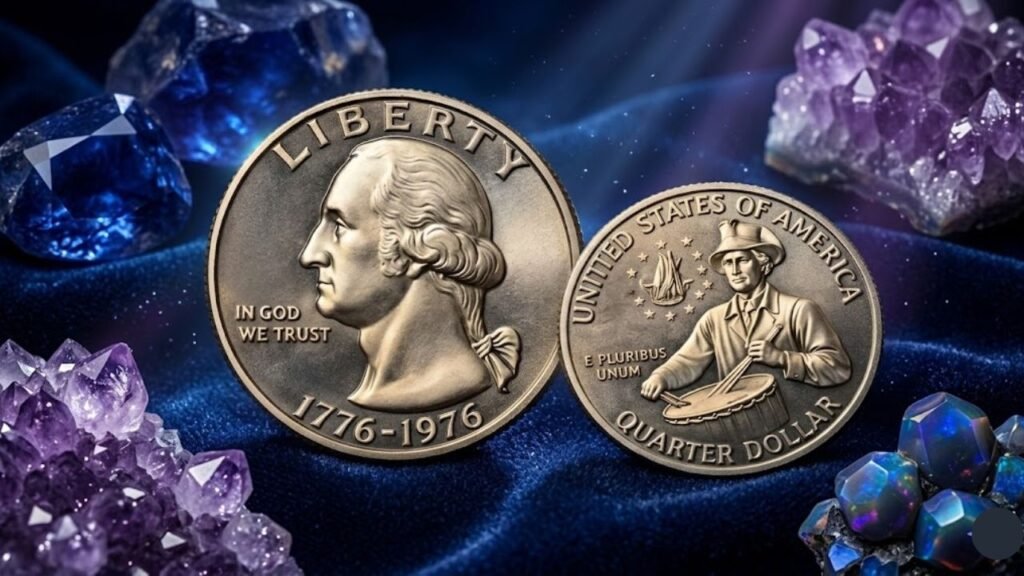
Bicentennial Quarter : Hey there! Have you ever really looked at the coins in your pocket? That quarter with the funny drummer on the back might actually be worth way more than 25 cents. We’re talking about the Bicentennial Quarter from 1976, and some of them are selling for crazy money in 2026. Let’s break down what makes these coins special and how you might be sitting on a hidden treasure without even knowing it.
What’s the Deal with These Quarters?
Back in 1976, America was throwing itself a huge birthday party for its 200th anniversary. The U.S. Mint decided to make special quarters to celebrate. Instead of the usual eagle on the back, these quarters show a colonial drummer kid with a torch and 13 stars around him. Super cool, right? The front still has George Washington, but look closely and you’ll see “1776–1976” instead of just one year. The Mint made these quarters in 1975 and 1976 only, so they’re pretty easy to spot. Millions and millions were made for people to use as regular money. But here’s where it gets interesting – some versions of this quarter are actually worth some serious cash today.
Coin Facts at a Glance
| Feature | Details You Need to Know |
|---|---|
| Year Minted | 1975 and 1976 only (look for 1776–1976 on the front) |
| Designer | Jack L. Ahr created the drummer boy reverse |
| Mint Locations | Philadelphia (no mint mark), Denver (D), San Francisco (S) |
| Regular Quarters | Made from copper-nickel clad, worth face value |
| Silver Versions | 40% silver, found in special collector sets |
| Proof Coins | Super shiny with mirror backgrounds, made at San Francisco |
| Error Coins | Mistakes like double strikes or off-center designs |
| What Makes Them Valuable | Silver content, perfect condition, mint errors |
| Grade Matters | MS-65 or higher = more money! |
| 2026 Hot Sellers | Silver proofs and error coins are in high demand |
Not All Bicentennial Quarters Are Created Equal
Here’s the truth: most Bicentennial Quarters you find in your change are still just worth 25 cents. Sorry to burst your bubble! But some special ones can be worth hundreds or even thousands of dollars. The key differences come down to what they’re made of, how they were made, and what condition they’re in. The really valuable ones include quarters made with silver instead of the usual metals, special proof coins with mirror-like finishes, and weird ones where the mint made mistakes during production. Collectors go absolutely nuts for these rare versions.

What Should You Look For?
If you want to find a valuable Bicentennial Quarter, here’s what to keep an eye out for:
- Check the edge – Silver quarters have a solid silver color all the way through, while regular ones show a brown strip
- Look for “S” mint marks – San Francisco made most of the special collector versions
- Examine the details – Coins with sharp, clear designs are worth more than worn-out ones
- Watch for weird stuff – Is anything doubled? Off-center? That could be a money error!
- Never clean your coins – Cleaning actually destroys value, so keep them just as you found them
How Much Are They Actually Worth?
Okay, let’s talk money. In 2026, the market for these quarters is really heating up. Regular worn-out Bicentennial Quarters? Still just a quarter, sorry. But a silver proof in perfect condition can easily bring $20 to $50. Really high-grade ones graded MS-67 or MS-68 have sold for hundreds at auction. The real jackpot is error coins. Some double-strike errors have sold for thousands of dollars at auction. Imagine finding one of those in your grandma’s old coin jar! Prices keep going up because more people are getting into coin collecting and want these pieces of history.
Should You Start Collecting?
Heck yes! The Bicentennial Quarter is actually a perfect coin for beginners. They’re easy to find, the design is awesome, and you never know when you might stumble on a rare one. Plus, you learn a lot about history while hunting for them. Serious collectors love them too because the rare versions hold their value well. It’s like a treasure hunt that could actually pay off. Just remember that most are common – the fun is in the search and learning to spot the special ones.

Frequently Asked Questions
Q: How can I tell if my Bicentennial Quarter is silver?
A: Look at the edge of the quarter. Regular quarters have a copper strip that looks like a brown line. Silver quarters are silver all the way through with no brown strip. You can also weigh it – silver quarters are slightly heavier.
Q: My quarter has a “D” on it. Is that worth anything?
A: The “D” stands for Denver Mint. Most Denver Bicentennial Quarters are common and only worth 25 cents unless they’re in absolutely perfect, uncirculated condition or have a mint error.
Q: Should I clean my old quarters to make them look better?
A: Nooooo! Please don’t! Cleaning coins scratches the surface and destroys their value. Collectors want coins in their original condition. A little dirt is way better than cleaning damage.

Q: Where can I sell a valuable Bicentennial Quarter?
A: You can try local coin shops, coin shows, or online sites like eBay. For really valuable ones, you might want to get them graded first by a professional service – that proves they’re real and tells buyers exactly what condition they’re in.
Q: What’s the most a Bicentennial Quarter has ever sold for?
A: Some rare error coins and perfect silver proofs have sold for several thousand dollars at auction. A super high-grade example with a major error could be worth $5,000 or more depending on the mistake and condition.
Q: Are Bicentennial Quarters from 2026 worth anything?
A: Wait – there’s no such thing! Bicentennial Quarters were only made in 1975 and 1976 with the 1776-1976 date. Any quarter dated 2026 is a regular quarter, not a Bicentennial issue. Make sure you’re looking at the right date!
The Bottom Line
Look, you probably won’t get rich from Bicentennial Quarters. Most are common and that’s totally fine! But every once in a while, someone finds a silver proof or a weird error coin that turns 25 cents into serious cash. That’s what makes coin hunting so fun – you just never know.
Next time you get change at the store or find an old coin jar at home, take a second to check those quarters. Look for the drummer, check the edge, and see if anything looks different. At worst, you’ve got 25 cents. At best? You might be holding a small piece of American history worth way more than you’d ever expect. Happy hunting!